Eating for muscle gain at lunch is a different problem than eating for weight loss. You're not trying to minimize calories. You're trying to hit a real protein target — 40-50g — while eating enough total food to support training and recovery. A 300-calorie lunch isn't the goal here.
The target for most people building muscle: 500-650 calories at lunch, with 40-50g of protein. Below 400 calories and you're undershooting what you need. Above 700 and you're front-loading the day in a way that usually causes problems at dinner.
Here's what actually hits that range.
The Muscle Gain Lunch Logic
Two things matter at lunch when you're building muscle:
1. Per-meal protein synthesis threshold Research on leucine thresholds and muscle protein synthesis consistently points to 25-40g of protein per meal as the range where your body meaningfully responds. Below that, the signal is weaker. At 40-50g, you're clearing the threshold with room to spare.
2. Total daily calories matter more than meal timing Getting enough protein at lunch matters. But the body doesn't build muscle from protein at one meal — it builds it from the cumulative signal across the day. A 40g lunch is one reliable anchor in a system that needs all three meals working together.
Here's how the best muscle gain lunches rank by calorie and protein:
| Lunch | Calories | Protein | Notes |
|---|---|---|---|
| Steak & veggie bowl | 520 | 46g | High creatine/zinc |
| Chicken rice bowl | 520 | 46g | Best protein-to-price |
| Pulled pork bowl | 510 | 42g | Best for batch prep |
| Salmon quinoa bowl | 510 | 44g | Omega-3 bonus |
| Beef taco salad | 510 | 42g | Lower carb option |
| Chipotle chicken bowl | 590 | 48g | Highest protein |
| Thai peanut chicken bowl | 620 | 46g | Highest calorie |
The Top Three for Building Muscle
Steak & Veggie Bowl — 520cal, 46g protein
Sirloin steak is not just a calorie-dense alternative to chicken. It provides creatine (a compound that directly supports muscular power output and recovery), zinc (important for testosterone production and immune function), and a complete amino acid profile with high leucine content.
The Steak & Veggie Bowl is built around this: sirloin steak over roasted sweet potatoes and asparagus with garlic butter. 520 calories, 46g protein, 22g fat. The fat content is higher than a chicken bowl, but dietary fat from quality red meat sources is not the muscle gain problem most people assume it is. It's satiating, it supports hormonal function, and it makes lunch taste like a real reward.
The sweet potato carbs (24g total carbs) are appropriate for an active person — they refill muscle glycogen without being excessive.
Chicken Rice Bowl — 520cal, 46g protein
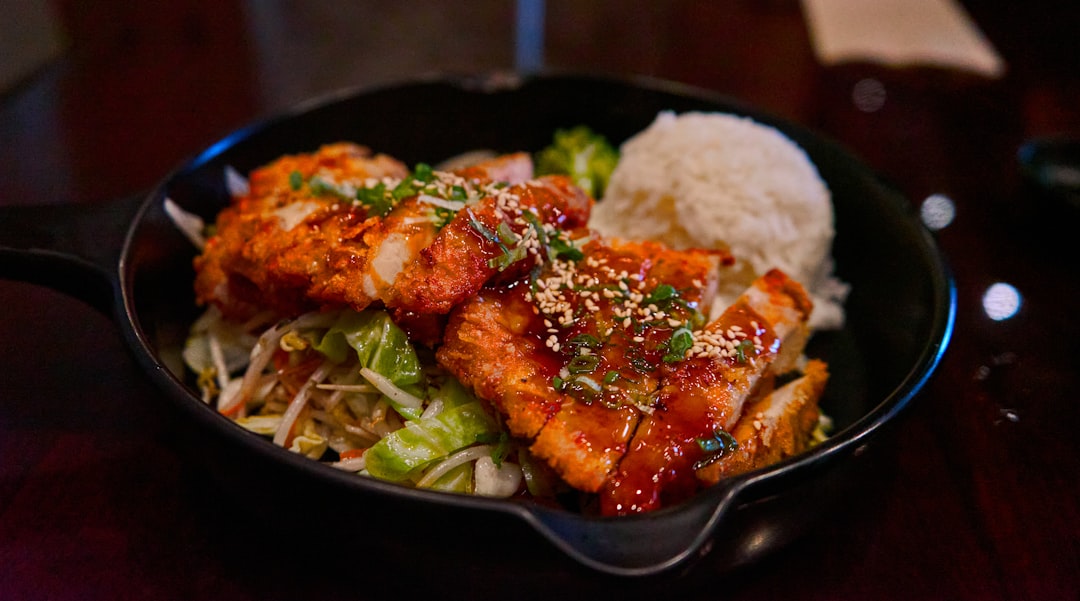
The classic formula exists because it works. Chicken breast + brown rice + broccoli hits 46g of protein at exactly 520 calories. The rice provides the carbohydrates for glycogen replenishment, the chicken provides a large clean protein dose, and the broccoli adds fiber and micronutrients that support recovery.
The Chicken Rice Bowl is the exact version of this — 4 oz chicken breast, 1 cup brown rice, broccoli florets, soy sauce. Simple, replicable, and designed specifically for batch cooking. Make five servings on Sunday, refrigerate them separately, and spend 90 seconds reheating at lunch each day.
The soy sauce matters more than it sounds — it adds sodium (which supports fluid balance and muscle function) and umami flavor that makes the meal feel substantial rather than bland.
Pulled Pork Bowl — 510cal, 42g protein
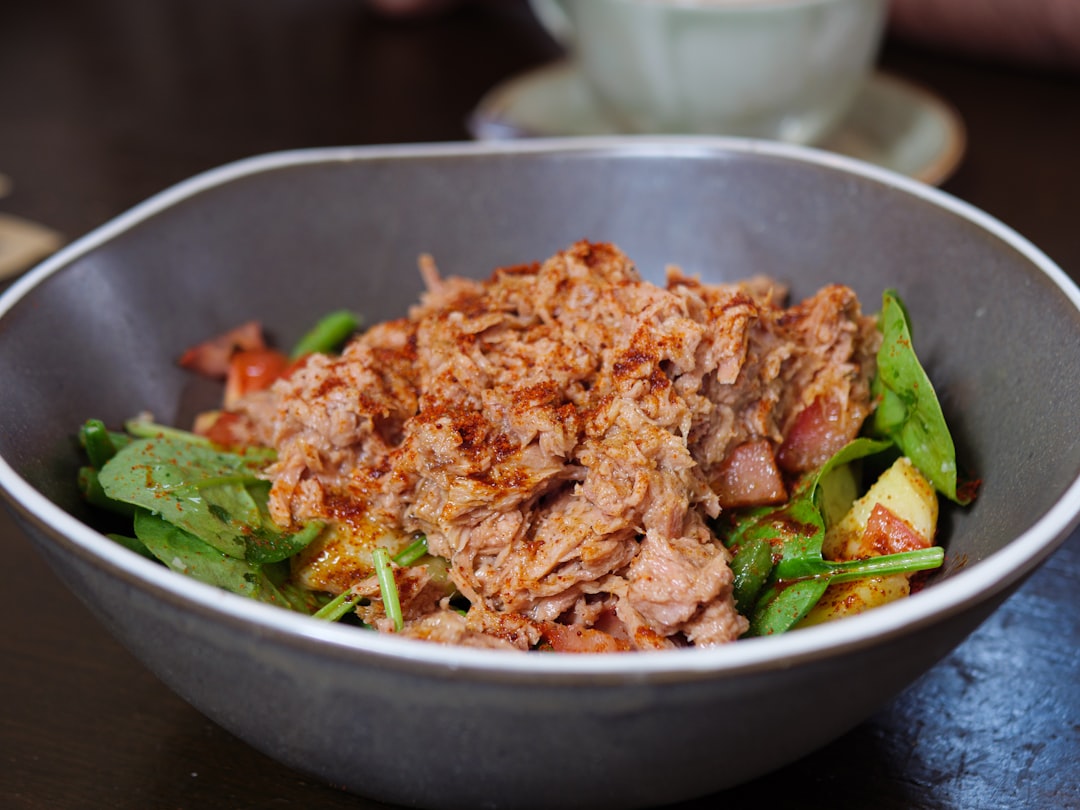
The most underrated muscle gain lunch on this list. Pulled pork (slow-cooked pork shoulder) provides around 28g of protein per 4 oz serving and reheats better than almost any other cooked meat — no rubbery texture, no moisture loss, same quality on day five as day one.
The practical advantage is batch scale. A 3 lb pork shoulder produces roughly 12-15 portions of pulled pork after cooking and shredding. That's two full weeks of lunch protein from one cooking session.
The Pulled Pork Bowl is the ready-to-eat version of this: BBQ pulled pork over brown rice with coleslaw on top. 510 calories, 42g protein. The BBQ sauce adds flavor without a significant calorie hit, and the coleslaw provides texture and crunch that makes the lunch more satisfying than plain meat and rice.
Post-Workout Lunch: What to Prioritize
If your training session happens in the morning and you eat lunch right after (within 60-90 minutes), your lunch nutritional strategy shifts slightly:
Prioritize carbohydrates more than usual. The post-workout window is when muscle glycogen is most efficiently replenished. Getting 40-50g of carbohydrates at your post-workout lunch (rice, sweet potatoes, oats) alongside your protein is the single best thing you can do for recovery. The carbs blunt cortisol, drive amino acid uptake, and refill what the workout depleted.
The best post-workout options from this list:
- Chicken rice bowl: 46g protein, 52g carbs
- Pulled pork bowl: 42g protein, 48g carbs
- Steak taco bowl: 44g protein, 48g carbs
If you're training in the evening, this post-workout priority doesn't apply to lunch — eat for your normal targets.
What to Add When You Need More Calories
During a building phase with a significant calorie surplus, your lunch needs to be more calorie-dense without destroying the protein ratio. Smart additions:
- Avocado (½): +115 calories, 1g protein, high fiber
- Extra serving of rice or quinoa: +150-200 calories, +4g protein
- Full-fat shredded cheese (¼ cup): +110 calories, +7g protein
- Olive oil drizzle (1 tbsp): +120 calories, 0g protein
- A side of whole grain bread or pita: +80-110 calories, +3-4g protein
The goal in a surplus isn't one enormous lunch. It's getting lunch to 600-700 calories reliably across the week, which you can achieve by adding one or two of the above to your normal 520-calorie base.
FAQ
How much protein do I actually need to build muscle?
The practical target for natural lifters is 0.7-1g per pound of bodyweight daily. A 175 lb person needs roughly 125-175g per day. At three meals, that's 42-58g per meal. A 40-50g lunch is hitting the target at the low and mid end of that range.
Is there a benefit to eating more than 50g of protein at lunch for muscle gain?
The incremental benefit beyond 40g per meal is diminishing for most people. Your body can use more than 40g per sitting — the old "your body can only absorb 30g at once" idea has been largely debunked — but the additional muscle protein synthesis response from eating 60g versus 40g at lunch is small. Better to distribute protein across meals than to eat 80g at one sitting and 15g at another.
Should I eat more at lunch on training days?
On training days, eating more carbohydrates (especially post-workout) is well-supported. Eating more protein on training days specifically has less evidence behind it — what matters more is hitting your daily total, and that doesn't meaningfully change based on whether you trained that day.