Breakfast is relatively easy to get right once you have the system down. But lunch is where most people quietly fall apart. You're in the middle of a workday, reaching for whatever's nearby, and 40g of protein feels like a lot when you're looking at a desk.
Here's the math problem: if you're targeting 150g of protein daily, that breaks down to roughly 40-50g across three meals. If you eat 30g at breakfast and 20g at lunch, you're putting 100g on dinner's plate — and consistently eating a 100g protein dinner means 14-oz steaks or enough chicken to feel miserable. Lunch needs to pull its weight.
40g at lunch is the anchor. Here's how to actually hit it.
The 40g Protein Math
Quick reference for what actually moves the needle at lunch:
| Food | Serving | Protein |
|---|---|---|
| Chicken breast (cooked) | 4 oz | 35g |
| Sirloin steak (cooked) | 4 oz | 32g |
| Ground beef, 90% lean (cooked) | 4 oz | 28g |
| Salmon fillet (cooked) | 4 oz | 28g |
| Canned tuna | 5 oz can | 30g |
| Pork tenderloin (cooked) | 4 oz | 30g |
| Deli turkey | 5 slices | 20g |
| Cottage cheese | 1 cup | 28g |
| Eggs | 3 large | 18g |
| Black beans (cooked) | ½ cup | 8g |
| Shredded cheese | ¼ cup | 7g |
Getting to 40g usually requires one substantial protein base — 4 oz of a cooked animal protein — plus one secondary source. Chicken alone at 4 oz gets you to 35g. Add a handful of shredded cheese and you're at 42g. Ground beef alone is 28g; add black beans and cheese and you're at 43g. The formula is almost always: main protein + one secondary.
Three Clean Paths to 40g at Lunch
Path 1: A Full Protein on Greens
The salad route works well for people who want to avoid carb-heavy lunches. The key is using an actual 4-5 oz portion of cooked protein — not a sprinkle of chicken strips on top of a pile of lettuce.
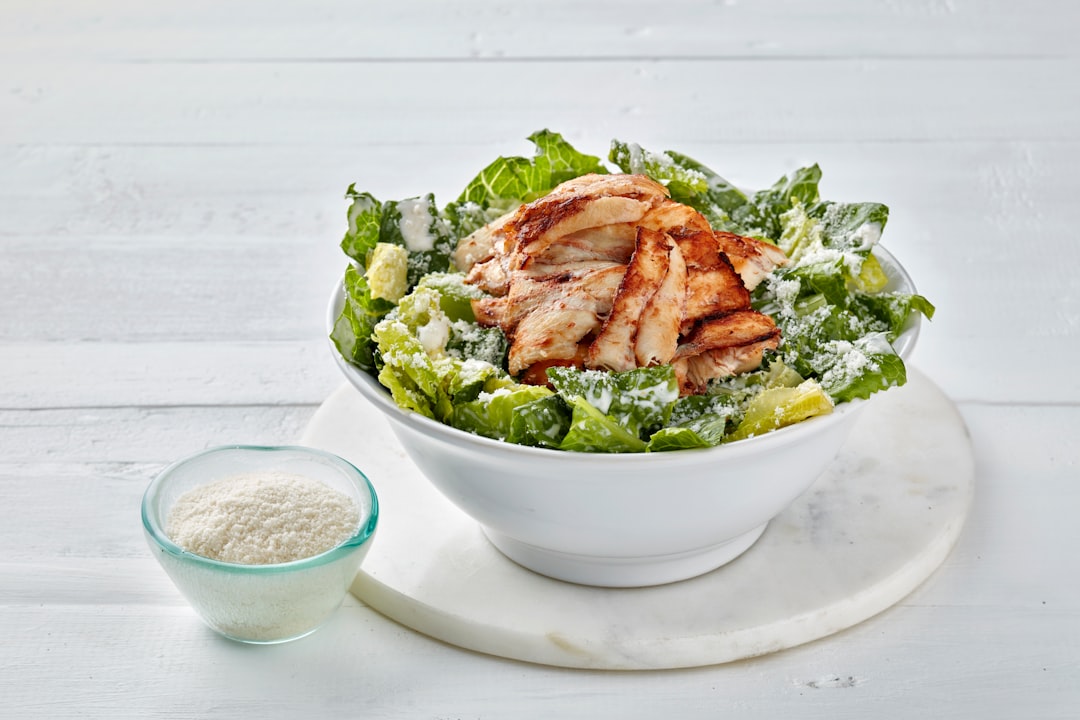
The Chicken Caesar Salad is the clearest example of this done right. 44g protein, 480 calories — a full grilled chicken breast over romaine, parmesan, croutons, and Caesar dressing. The protein number is higher than most people eat at dinner. It's a meal, not a side dish that got promoted.
The parmesan is doing 7-8g of that protein quietly in the background. That's the pattern: a big protein base + a dairy element that adds 7-14g without being the headline ingredient.
Path 2: Ground Protein + Grain + Secondary Source
Ground meat over rice or in a bowl is the most repeatable high-protein lunch format. You can season it dozens of ways, it batch preps easily, and the combination of ground protein + grain + cheese or beans consistently hits 40-45g.
The formula: 4 oz cooked ground meat (28g from beef, 25g from turkey) + ½ cup cooked rice (3g) + ¼ cup shredded cheese (7g) + ¼ cup black beans (4g) = 42g. That's a basic rice bowl at 40g+ before you add any vegetables.
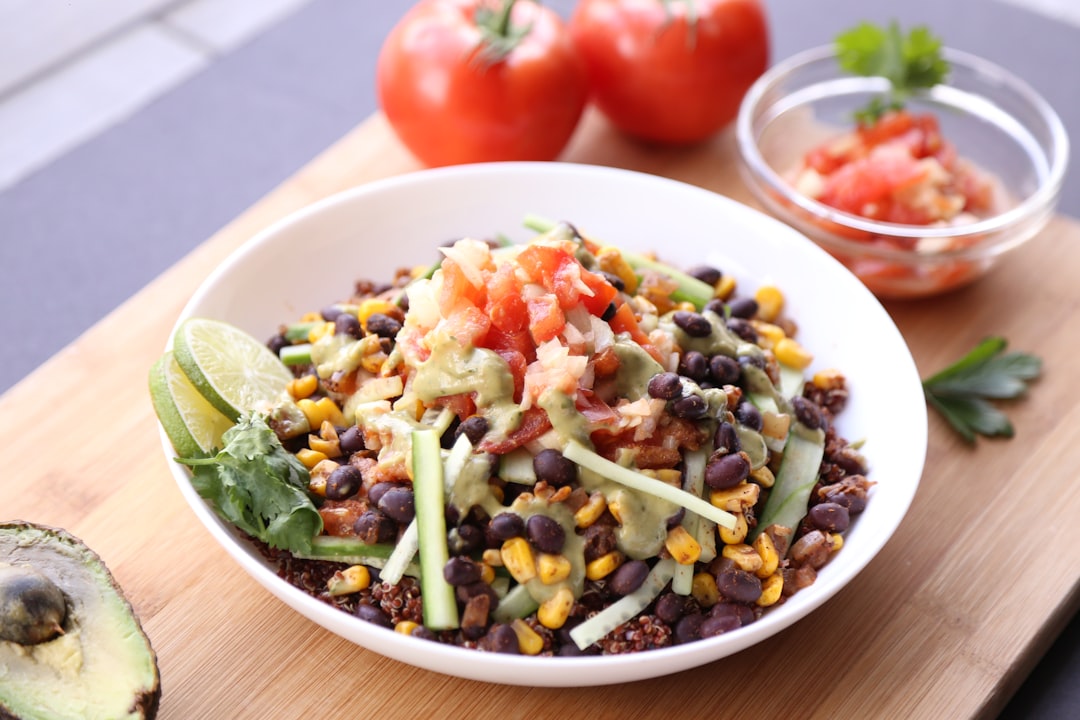
The Beef Taco Salad takes this into taco territory — 42g protein, lean ground beef, black beans, romaine, cheese, salsa, and avocado in one bowl. It's the version that doesn't taste like a protein delivery system. It tastes like lunch.
Path 3: Fish + Grain
Fish is the most underused lunch protein. It's fast (canned tuna requires zero cooking), protein-dense, and pairs well with grain bowl formats.
One can of tuna is 30g of protein by itself — already 75% of the target. One salmon fillet is 28-35g depending on size. Either one over quinoa adds another 8g per cup, which is why fish + grain combinations hit 40g so efficiently.
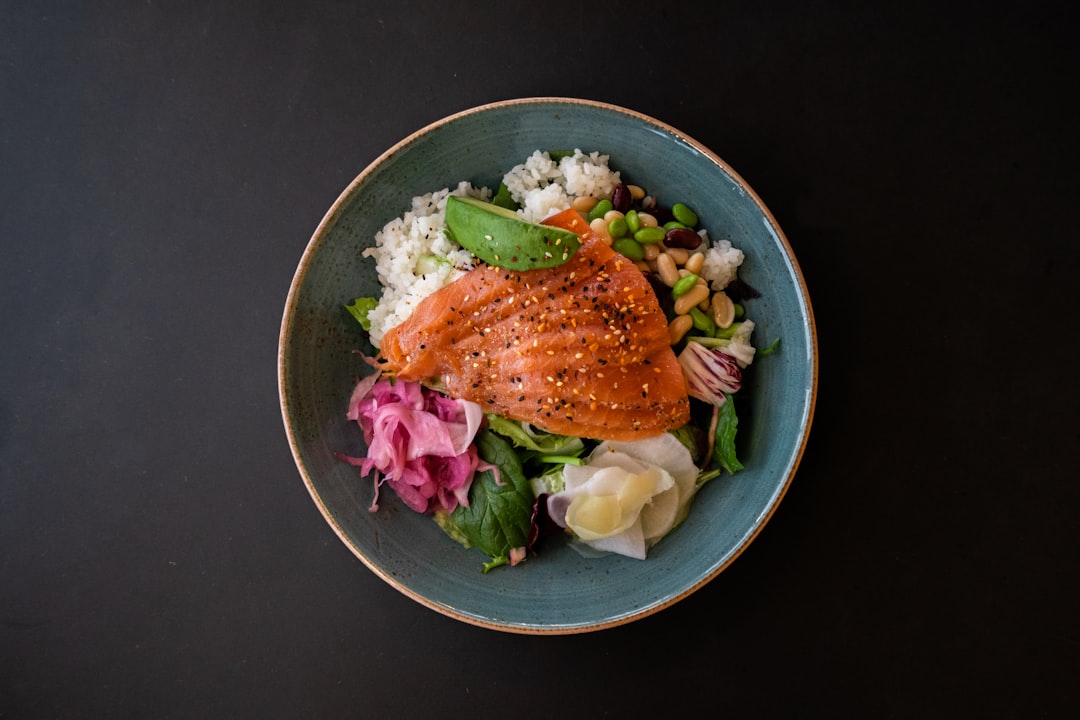
The Salmon & Quinoa Bowl is 44g protein at 510 calories — salmon fillet over quinoa with avocado and cucumber. The quinoa is specifically valuable here (8g per cup versus 4g for white rice) and its amino acid profile complements fish well. It's the lunch that sounds fancy but is essentially two things in a bowl.
Four Lunch Traps That Keep You Under 20g
Trap 1: The salad with garnish-level protein A garden salad with a few strips of grilled chicken is 12-15g of protein, not 40g. You need a full 4 oz serving — that's roughly the size of a deck of cards — of cooked protein for the numbers to work. Half a chicken breast counts. Three strips don't.
Trap 2: The wrap that's mostly tortilla A flour tortilla is 5-6g of protein. Four slices of deli turkey is 16g. You're at 22g from two primary ingredients before accounting for the fact that most people use two or three slices of turkey, not four. To hit 40g in a wrap format, you need 4-5 oz of actual cooked protein, not just deli slices.
Trap 3: Trusting restaurant labels A "high protein" menu item at most cafes is 20-25g. That's a starting point, not a target. The options that actually hit 40g are usually the ones where you control the protein portion — or you explicitly ask for double protein.
Trap 4: Skipping the secondary source Beans, cheese, cottage cheese, and Greek yogurt dressings are secondary protein sources that add 7-14g per serving without being the main ingredient. A bowl that has chicken + ½ cup of black beans goes from 35g to 43g. Don't forget the supporting cast.
The One-Formula Approach
4 oz cooked protein + 1 cup grain or greens + 1 secondary source (beans, cheese, or cottage cheese) = 40-48g every time.
That covers rice bowls, salads, wraps, and grain bowls. It scales to batch prep (cook the protein Sunday), restaurant eating (double protein + beans), and desk lunch eating (canned tuna + pre-cooked rice + cheese = 40g in 3 minutes). Pick your format, use the formula, hit the number.
FAQ
Can I hit 40g without eating a large portion?
Yes. 4 oz of cooked chicken breast is about the size of a deck of cards — modest in size but dense in protein. You don't need volume to hit 40g. You need intentional ingredient selection. One protein + one secondary source is usually enough, and neither has to be a huge serving.
What's the fastest 40g lunch I can make with no cooking?
Canned tuna (30g) + ½ cup cottage cheese (14g) + salt and hot sauce, with crackers or bread. 44g of protein in under 3 minutes with zero cooking. Not photogenic, but nutritionally excellent.
Is it better to spread 40g across lunch or eat it all at once?
Eating it at once at lunch is fine. The per-meal protein synthesis threshold is about 25-40g, so a single 40g serving at lunch is triggering a meaningful muscle protein synthesis response. There's no meaningful benefit to splitting it across two mini-meals for most people.